
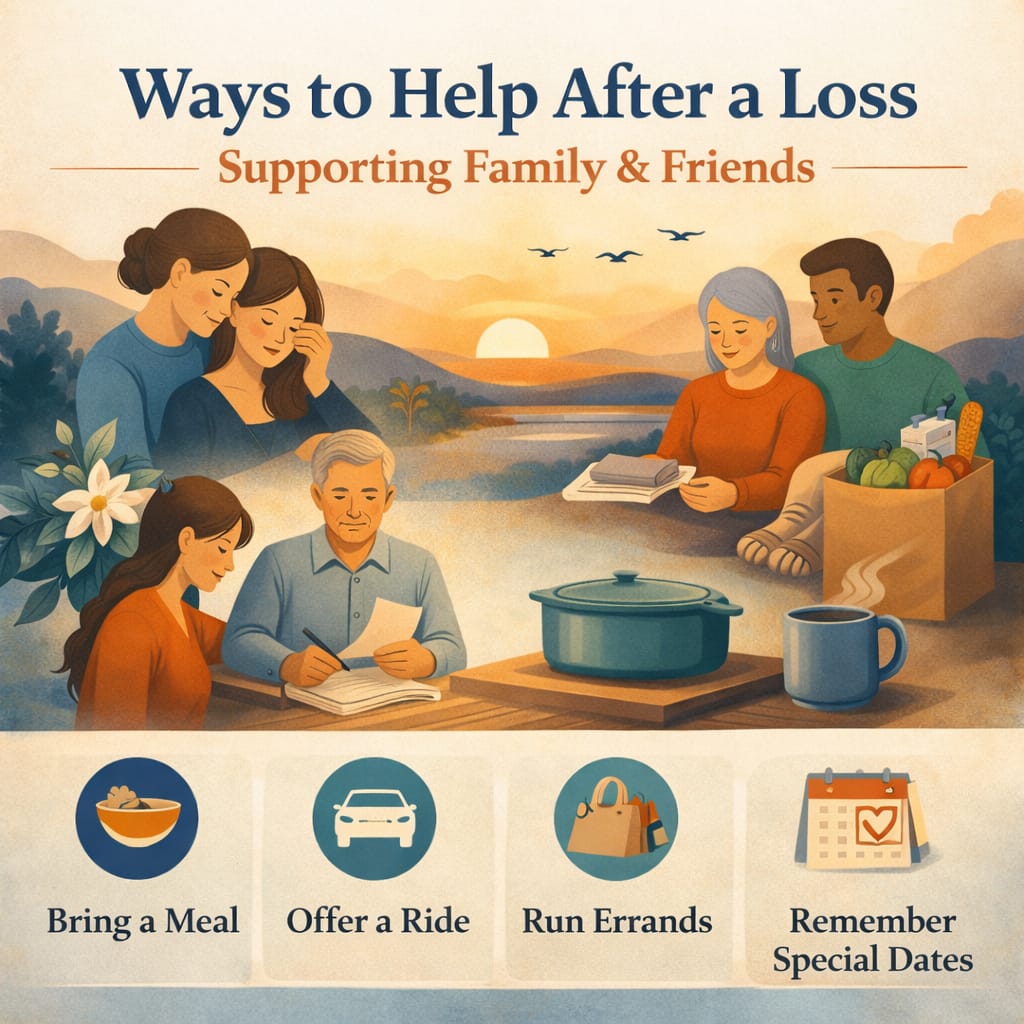
When someone loses a loved one, many people want to help but are not sure what to do. They may worry about saying the wrong thing, overstepping, or adding to the family’s stress. So they send a quick text, say “let me know if you need anything,” and then step back.
The intention is good. The problem is that grieving people are often too overwhelmed to figure out what they need, much less assign tasks, follow up, or manage offers of help.
Real support is usually not about grand gestures. It is about reducing friction, lightening the load, and making hard days a little easier. The most helpful people are often the ones who do small, practical things consistently and gently.
Start with specifics, not general offers
One of the most common phrases people use after a death is, “Let me know if you need anything.” It sounds caring, but it puts the burden back on the grieving person. They now have to identify a need, decide whether to ask, choose whom to ask, and follow through. In many cases, they will not.
A better approach is to offer something concrete.
Instead of saying:
“Let me know if you need anything.”
Try:
“I can bring dinner on Thursday.”
“I can pick up the kids from school this week.”
“I am free to make some phone calls for you.”
“I can walk the dog tomorrow morning.”
“I can sit with you while you sort through paperwork.”
Specific offers are easier to accept. They feel real, immediate, and less emotionally demanding.
Help with daily life
Grief does not pause the ordinary responsibilities of life. Meals still need to be made. Pets still need care. Trash still has to go out. Kids still need rides, homework help, and attention. The household may feel completely upside down, especially in the first days and weeks.
Some of the most helpful forms of support are the least glamorous. Dropping off food, running errands, mowing the lawn, doing laundry, washing dishes, or helping tidy a space can make an enormous difference.
If you are close to the person or family, do not be afraid to say:
“I am going to the grocery store. Send me your list.”
“I can handle dinner tonight.”
“I can come over for an hour and help with dishes or laundry.”
Those kinds of offers meet real needs and remove decision-making during a time when even basic choices can feel exhausting.
Take something off their plate
After a death, there are often dozens of tasks that need attention all at once. Family members may be contacting relatives, speaking with a funeral home, gathering documents, updating employers, responding to messages, and trying to figure out what happens next.
Many people want to help emotionally, but practical help is just as important. Think in terms of what you can take over or make easier.
You may be able to:
-
coordinate a meal train
-
share funeral or memorial details with others
-
help organize rides or childcare
-
notify a broader group of friends or community members
-
collect photos for a memorial
-
help create a guest list
-
manage flower deliveries or food drop-offs
-
sit with the person while they make difficult calls
A grieving person does not need to become the project manager of everyone else’s concern.
Be present without forcing conversation
Not everyone wants to talk right away. Not everyone wants company right away either. But many grieving people appreciate quiet, steady presence. You do not need to have the perfect words. In fact, trying too hard to say something profound can sometimes make the moment more uncomfortable.
Often, the most meaningful thing you can do is simply show up with kindness and patience.
You might say:
“I am here.”
“You do not need to respond.”
“I am thinking of you.”
“I can sit with you if you want company.”
“I can just handle a few things around the house.”
Presence matters. So does respecting their pace.
Keep showing up after the first week
Support often floods in right after a death and then fades quickly. But grief does not end after the funeral, the memorial service, or the first wave of condolences. In many ways, the hardest part can begin once everyone else returns to normal life.
That is when follow-up matters most.
Set a reminder to check in again in two weeks, one month, three months, and around important dates like birthdays, anniversaries, and holidays. A simple message can mean a lot:
“Thinking of you today.”
“I know this week may be hard.”
“I have some time this weekend if you want company or help with anything.”
Consistency is often more valuable than intensity.
Respect that grief looks different for everyone
Some people want to talk constantly. Others withdraw. Some become highly organized and task-focused. Others feel frozen and unable to do much of anything. Some find comfort in humor. Others do not. There is no single right way to grieve.
Avoid judging how someone “should” be handling things. Avoid comments that rush them forward or make comparisons. Phrases like “they are in a better place,” “everything happens for a reason,” or “at least they lived a long life” may be intended to comfort, but they can land poorly.
It is usually better to follow the grieving person’s lead. Let them tell the story they need to tell. Let them cry, vent, repeat themselves, or sit in silence.
Offer help with children, pets, and dependents
Loss affects more than one person. Children may need structure, transportation, meals, distractions, and reassurance. Pets still need to be fed, walked, groomed, and cared for. Older relatives or dependents may also need additional support.
Practical help in these areas can be especially valuable because it gives the grieving person room to breathe.
Examples include:
-
picking children up from school or activities
-
helping with babysitting
-
taking a dog for walks
-
refilling pet food or supplies
-
sitting with an older family member
-
helping manage schedules for the week
These are concrete ways to reduce stress at a time when the family may be stretched thin.
Support the person, not your own discomfort
Sometimes people avoid grief because it makes them uncomfortable. They worry they will cry, say the wrong thing, or be reminded of their own losses. That discomfort is human, but it should not become the grieving person’s burden.
Try not to disappear because you do not know what to say. Try not to make the conversation about your own fear of death or your own need to fix things. Grief is not something to solve. It is something to witness and support.
Helpful support sounds like:
“This is awful, and I am so sorry.”
“I am here with you.”
“You do not have to go through this alone.”
Simple and sincere is enough.
Help with memorial and after-loss tasks
In the days following a death, there may be funeral, memorial, paperwork, and estate-related responsibilities that feel overwhelming. Depending on your relationship, you may be able to help gather information, organize materials, or support the person through decisions.
That might include:
-
helping gather photos or stories for a memorial
-
assisting with obituary drafts
-
helping organize documents
-
making a list of accounts or institutions to notify
-
helping track who has offered help
-
sitting with the person while they review next steps
Even if you are not the person handling the estate, you may still be able to reduce the mental load.
Do not underestimate small acts
Not every helpful act needs to be large, visible, or formal. Small acts often matter most because they feel manageable and sustainable.
A short text.
A coffee left at the door.
A handwritten card.
A reminder that they are not forgotten.
A quiet visit.
An offer to handle one errand.
A meal on an ordinary Tuesday three weeks later.
Those moments tell the grieving person that support did not vanish after the public rituals ended.
When you are not sure what to do
If you truly do not know what would help, it is okay to say so honestly and kindly.
You can say:
“I want to support you, and I know you may not know what you need right now. I can bring dinner, help with errands, or just sit with you. You do not need to answer right away.”
That gives options without pressure.
Final thought
Helping after a loss is not about having perfect words or a flawless plan. It is about making a painful time a little less lonely and a little less overwhelming. The best support is practical, specific, gentle, and ongoing.
You do not have to do everything. You just have to do something that helps.
If you have feedback, questions, or ideas for future articles or Information Hubs, please contact us. Your insights help us create valuable content.