
 Buried in Work Staff
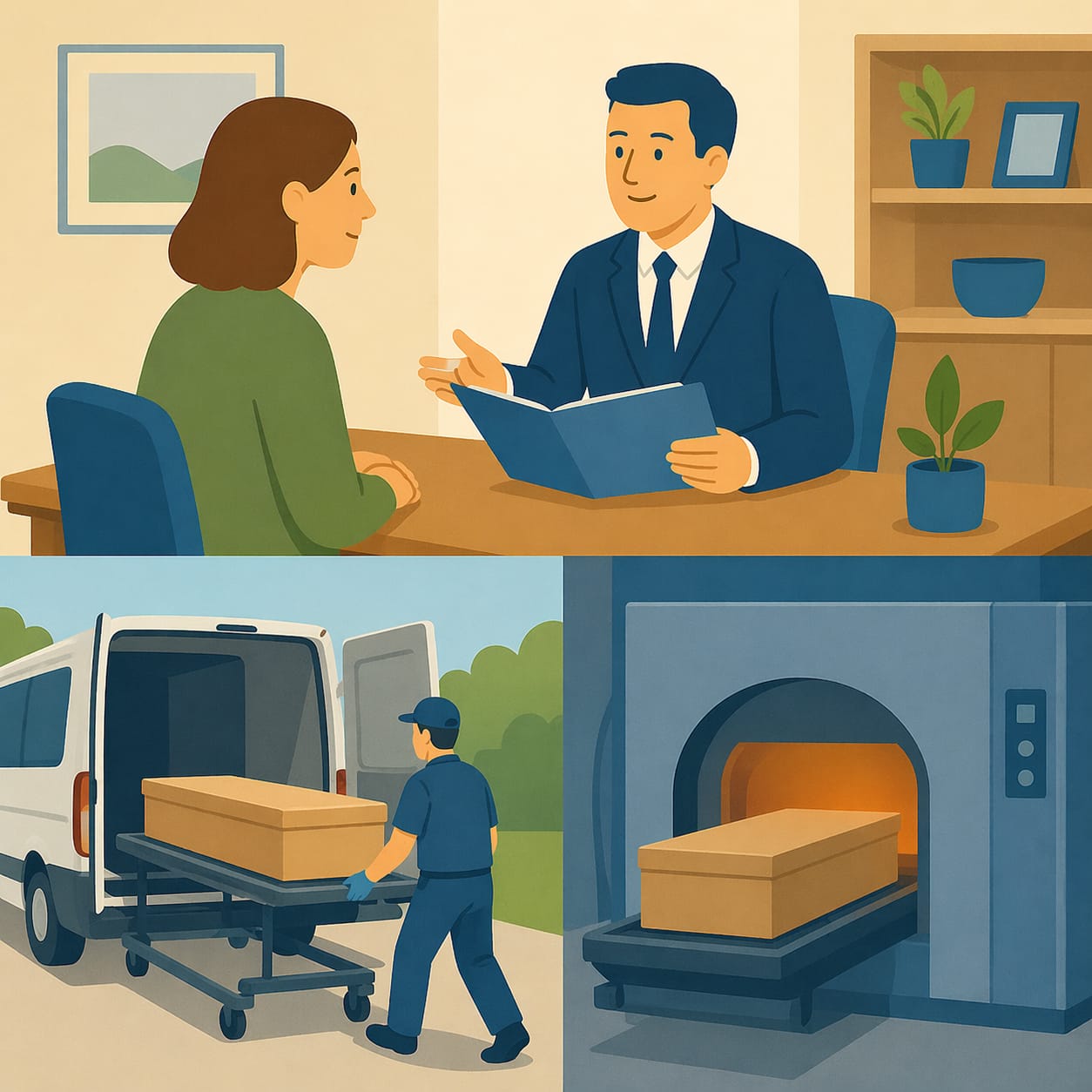
Direct cremation is the simplest form of cremation. There’s no viewing, no visitation, and no formal service with the body present before cremation. The body is cremated shortly after death, and the cremated remains are returned to the family.
That’s the definition. But it doesn’t tell the whole story.
Because direct cremation isn’t about doing nothing. It’s about separating the cremation itself from how you choose to remember someone.
The simplest way to understand it
If traditional funeral planning bundles everything together, direct cremation unbundles it.
Instead of:
-
services happening immediately
-
decisions being made under pressure
-
everything handled through one event
direct cremation allows you to:
-
complete the cremation first
-
take your time
-
plan something meaningful later, if you want to
That shift is why many families are choosing it.
What’s included in direct cremation?
While direct cremation is often called “simple,” there are still several important steps involved. A standard direct cremation typically includes:
-
transportation of the deceased
-
basic care and refrigeration
-
required paperwork and permits
-
the cremation process itself
-
a temporary container for the remains
-
return of the cremated remains to the family
What it does not include is just as important:
-
no embalming
-
no viewing or visitation
-
no formal funeral service before cremation
That’s what makes it “direct.”
What happens after the cremation?
This is where people sometimes get tripped up.
Choosing direct cremation does not mean you skip a memorial or never gather. It just means you’re not required to do it immediately or in a traditional format.
After the cremation, families can choose to:
-
hold a memorial service days, weeks, or months later
-
gather at home, a place of worship, or somewhere meaningful
-
scatter the remains or place them in a cemetery
-
keep the urn, divide the remains, or create keepsakes
In practice, many families still hold some kind of service. They just do it on their own timeline.
Why people choose direct cremation
There isn’t one reason. But there are a few common ones.
1. Simplicity
Direct cremation removes a lot of immediate decision-making. There’s no need to coordinate a service right away, choose a casket, or make rapid choices under stress.
For families who want a quieter, more private approach, that simplicity can be a relief.
2. Flexibility
This is often the biggest factor.
Families can:
-
wait until everyone can travel
-
plan something more personal
-
avoid rushing into decisions during grief
Instead of fitting into a set structure, they can create something that actually reflects the person who died.
3. Cost
Direct cremation is usually less expensive than a traditional funeral with burial or even a full-service cremation.
That’s not just because it’s “cheaper,” but because you’re not paying for services or items you don’t want or need.
For some families, that’s about affordability. For others, it’s about using resources differently, such as putting money toward a meaningful gathering instead of formal services.
When direct cremation may not be the best fit
Direct cremation isn’t right for everyone.
It may not be a good fit if:
-
having a viewing or seeing the body is important
-
religious traditions require specific timing or practices
-
family members need a structured service immediately
-
there is strong disagreement among loved ones
In those cases, a more traditional approach or a hybrid option may make more sense.
A common misunderstanding to watch for
One of the biggest mistakes families make is assuming that direct cremation means “we’ll figure something out later” and then never coming back to it.
Without a plan, it’s easy for:
-
memorials to be delayed indefinitely
-
cremated remains to sit unclaimed or undecided
-
families to miss the chance to gather and grieve together
Direct cremation works best when it’s a deliberate choice, not a default or avoidance.
A better way to think about it
Instead of asking, “Do we want a funeral or direct cremation?” it may be more helpful to ask:
-
Do we want to separate the cremation from the memorial?
-
Do we want more time and flexibility?
-
Do we want to design something ourselves rather than follow a set structure?
If the answer to those questions is yes, direct cremation may be a strong fit.
Final thoughts
Direct cremation is not about doing less. It’s about choosing a different sequence.
The cremation happens first. Everything else becomes a choice.
And for many families, that shift creates space to grieve, gather, and remember in a way that feels more personal and more manageable.
