
 Buried in Work Staff
When families start looking at cremation options, one of the first questions is usually this: what’s the difference between direct cremation and full-service cremation?
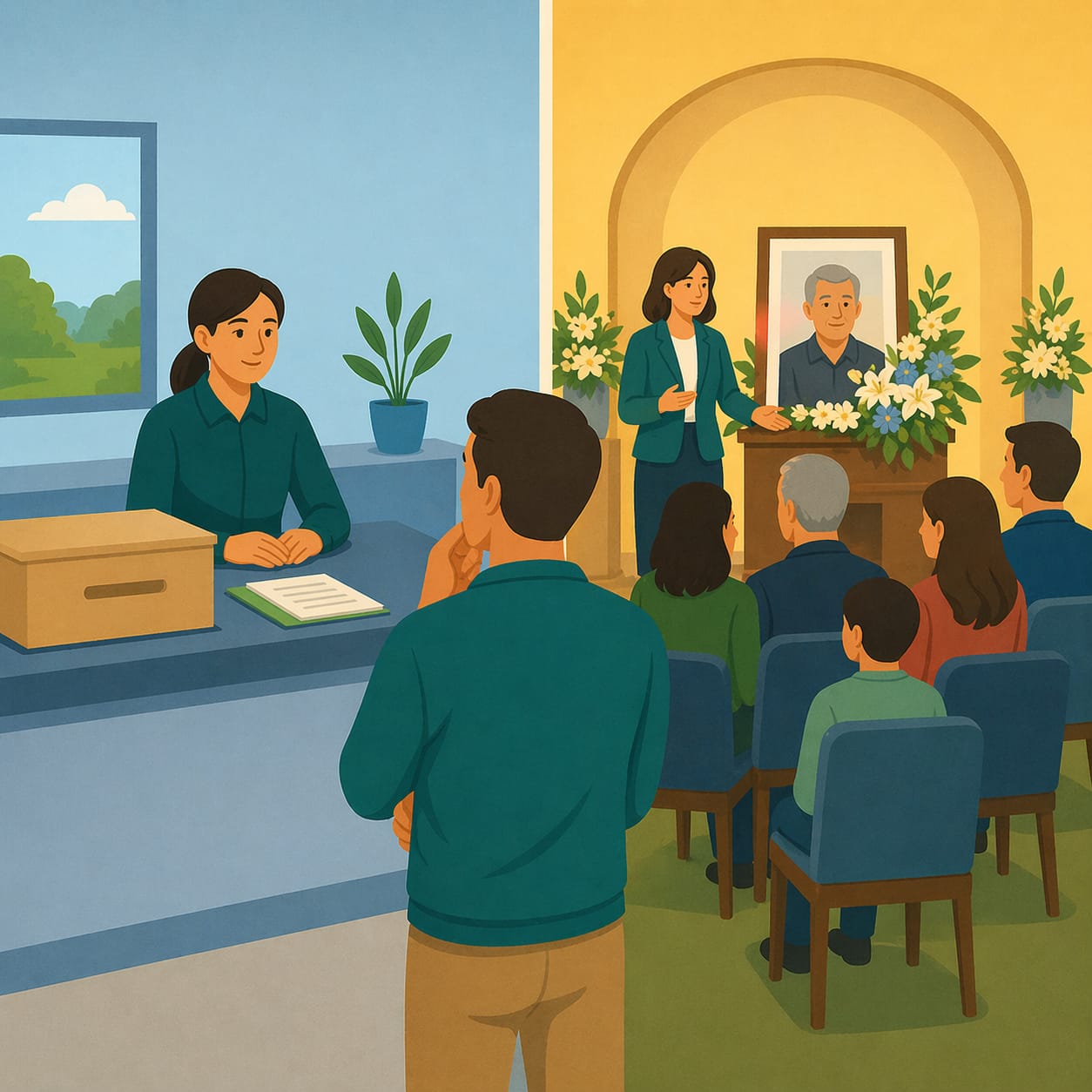
At a basic level, both involve cremation. The difference is everything around it. One is designed to be simple and minimal. The other builds in more support, more ceremony, and often more immediate structure for the family.
That doesn’t make one better than the other. It just means they solve different problems. If you’re trying to decide which one fits your family, these eight facts can help.
1. The cremation itself is not the main difference
This is the first thing people often misunderstand. In both direct cremation and full-service cremation, the body is cremated. The core disposition method is the same.
What changes is whether the family wants services, preparation, viewing, in-person support, and more hands-on guidance before or around that cremation.
So the real question usually isn’t, “Do we want cremation?” It’s, “How much support and ceremony do we want around it?”
2. Direct cremation is the simplest option
Direct cremation usually means the body is cremated without a viewing, visitation, or formal service with the body present beforehand.
It often includes:
-
transportation of the deceased
-
basic care and refrigeration
-
required paperwork and permits
-
the cremation itself
-
a temporary container or simple urn
-
return of the cremated remains
For families who want simplicity, privacy, or fewer immediate decisions, that can be a real benefit. It allows the cremation to happen first, with any memorial or gathering planned later, if at all.
3. Full-service cremation gives families more structure
Full-service cremation includes cremation, but also adds one or more services and more direct guidance from the provider.
Depending on the funeral home, that may include:
-
a visitation or viewing
-
a funeral service before cremation
-
use of staff and facilities for a memorial
-
help with personalization and ceremony planning
-
coordination with clergy, celebrants, musicians, or cemetery staff
-
a more formal presentation of the deceased
For some families, that structure matters a lot. It creates a clear time to gather, a place for people to show up, and a more familiar framework for saying goodbye.
4. Cost is often different, but that is not the whole story
Direct cremation is usually less expensive than full-service cremation. That is one of the main reasons many families look at it first.
But the more useful question is not just, “Which one costs less?” It’s, “What are we paying for?”
With full-service cremation, the added cost often reflects:
-
staff time
-
facility use
-
preparation of the body
-
ceremony coordination
-
viewing or visitation arrangements
-
additional merchandise or service elements
For some families, those extras are unnecessary. For others, they are exactly what helps make a hard moment feel manageable and meaningful.
5. Direct cremation does not mean no memorial
This is one of the biggest myths.
Choosing direct cremation does not mean the family has to skip a memorial or do nothing. It simply means the provider is not arranging a formal service with the body present before cremation.
Families can still:
-
hold a memorial later
-
gather at home
-
use a church or other meaningful location
-
bury or inurn the cremated remains
-
scatter the remains
-
create keepsakes or a more personal tribute
In many cases, families choose direct cremation specifically because they want more time and flexibility to plan something that feels more personal.
6. Full-service cremation may be a better fit when people need to see the body
For some families, seeing the person who died matters deeply. It may help the loss feel real. It may be important for religious reasons. Or it may simply feel emotionally necessary.
That is where full-service cremation often becomes the better fit. If the family wants:
-
a viewing
-
a visitation
-
a funeral before cremation
-
a more traditional goodbye
then direct cremation may feel too limited.
This is especially true when family members have very different grieving styles. One person may want simplicity, while another may need a clear and visible moment of farewell.
7. Timing and flexibility are often deciding factors
Direct cremation tends to offer more flexibility after the cremation takes place. Families can plan a memorial weeks or months later when travel, emotions, and schedules are more manageable.
Full-service cremation often places more of the planning up front. That can feel comforting for families who want a clear process right away. It can also feel overwhelming if no one is ready to make quick decisions.
A good way to think about it is this:
-
If your family wants time and breathing room, direct cremation may fit better.
-
If your family wants immediate structure and support, full-service cremation may fit better.
8. The best choice depends on the family, not the trend
Cremation has become very common, and direct cremation gets a lot of attention because of its simplicity and lower cost. But popularity should not make the decision for you.
Direct cremation may be the right fit if your family values:
-
simplicity
-
privacy
-
flexibility
-
lower immediate cost
-
planning something later on your own terms
Full-service cremation may be the right fit if your family values:
-
tradition
-
in-person support
-
viewing or visitation
-
a structured ceremony
-
immediate gathering and community presence
Neither choice is more loving, more responsible, or more respectful by default. The right option is the one that fits the emotional, practical, cultural, and financial needs of the people involved.
Final thoughts
If you are deciding between direct cremation and full-service cremation, start by focusing on what your family actually needs.
Do you want simplicity or structure? Privacy or public ceremony? Fewer immediate decisions or more guided support? A later memorial or a service right away?
Once those answers are clearer, the decision usually gets easier.
Because in the end, this is not just about cremation. It is about choosing the kind of experience that will best support the people left behind.
