
 Buried in Work Staff
This is one of the most common questions families ask, and it’s a fair one. But there’s an important distinction that often gets missed.
There are really two timelines to understand:
-
How long the cremation itself takes
-
How long the entire process takes from death to receiving the remains
Those are very different answers.
The cremation itself: usually 1 to 2 hours
For traditional, flame-based cremation, the actual time inside the cremation chamber is typically between one and two hours for an adult.
There are exceptions:
-
smaller bodies may take less time
-
larger bodies may take longer
-
the condition of the chamber and equipment can affect timing
In rare cases, cremation can be shorter or longer than that range. But for most families, it’s safe to think in terms of roughly 1 to 2 hours for the cremation itself.
That said, the cremation doesn’t start the moment someone passes away, and it doesn’t end when the chamber turns off. There are several steps before and after that matter just as much.
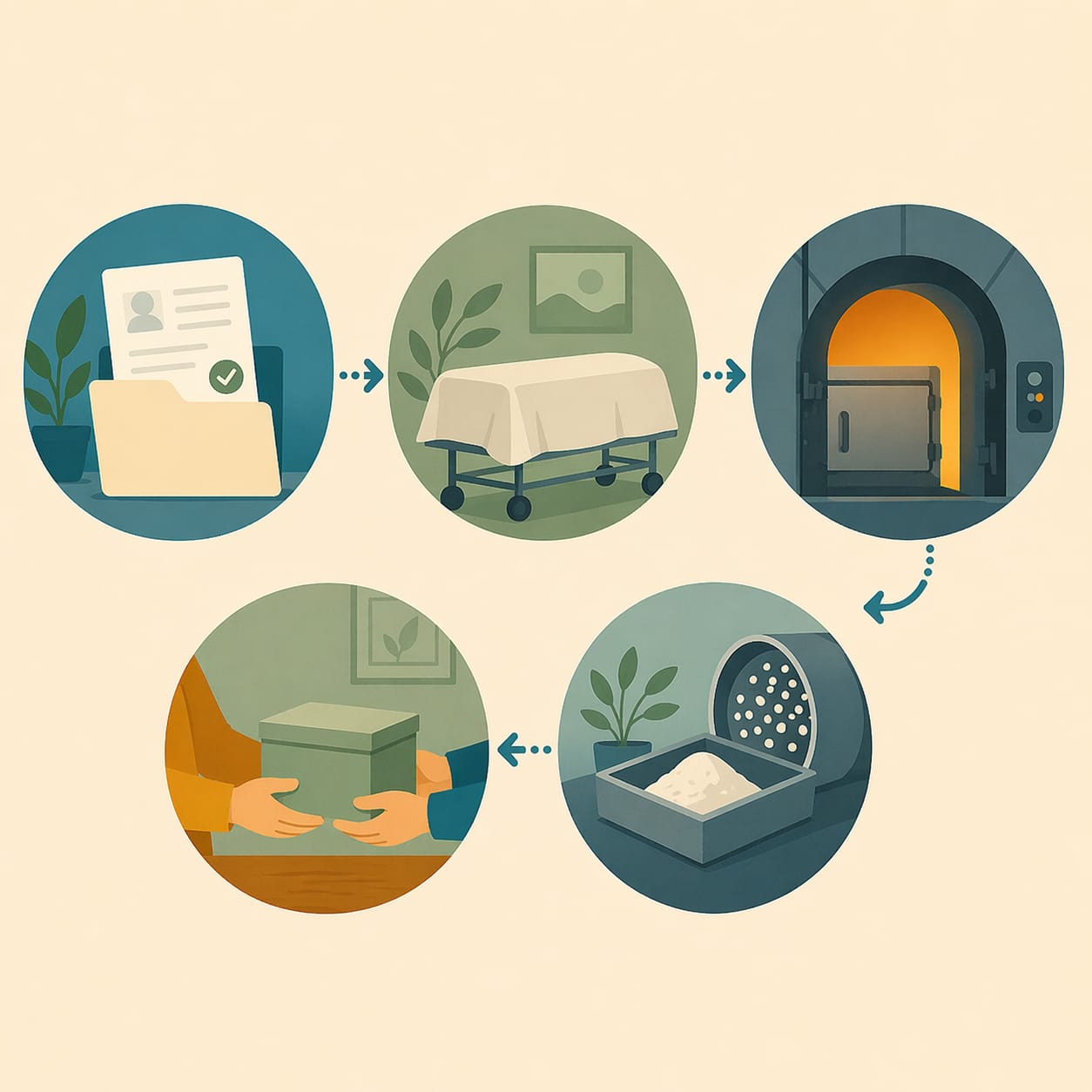
The full timeline: usually several days
From the time of death to when cremated remains are returned, the process usually takes a few days to about a week, though it can be shorter or longer depending on the situation.
Here’s what affects that timeline.
1. Legal requirements and paperwork
Most states require:
-
a death certificate to be completed
-
a cremation authorization to be signed
-
in some cases, a waiting period before cremation
It’s common for cremation to occur at least 48 hours after death, though this can vary.
2. Scheduling and provider availability
Crematories operate on schedules. If there are multiple cases ahead, or if the facility is busy, that can add time.
3. Family decisions
If the family is planning:
-
a viewing or visitation
-
a funeral before cremation
-
a witnessed cremation
those choices can extend the timeline.
4. Processing and return of remains
After cremation:
-
the remains must cool
-
metal is removed
-
the remains are processed
-
the urn or container is prepared
-
final identification checks are completed
This typically adds another day or two before the remains are ready to be returned.
What about alkaline hydrolysis?
Alkaline hydrolysis, sometimes called water-based cremation, follows a different process and timeline.
Instead of flame and heat, it uses:
-
water
-
alkaline chemicals
-
heat and pressure
to accelerate natural decomposition.
The process itself typically takes several hours, often longer than flame-based cremation, commonly in the range of 6 to 20 hours depending on the system and conditions.
After that, there are still steps similar to traditional cremation:
-
drying and processing the remaining bone material
-
placing the remains into a container
-
completing identification checks
So while the method is different, the overall experience for the family is similar in terms of when remains are returned.
Why timelines can vary more than you expect
Families often expect a precise answer, but in reality, cremation timelines are influenced by a combination of legal, logistical, and personal factors.
A few things that can extend timing:
-
delays in paperwork or signatures
-
medical examiner involvement
-
holidays or weekends
-
high demand at the crematory
-
special requests, like witnessing
None of these are unusual. They’re part of how the process is designed to ensure accuracy, safety, and proper documentation.
A helpful way to think about it
If you want a simple framework:
-
Cremation itself: about 1 to 2 hours
-
Water-based cremation: several hours, often longer
-
Total process: usually several days to a week
That gives you a realistic expectation without getting lost in edge cases.
Final thoughts
The timing matters, but not in the way most people initially think.
What families usually care about is not just speed, but clarity. When will it happen? When will we get the remains back? What should we expect in between?
A good provider will walk you through that timeline clearly. And once you understand the steps involved, the process tends to feel more predictable and a lot less uncertain.
