
 Buried in Work Staff
This is one of those questions people don’t think to ask until they’re sitting across from a funeral director. Then it becomes very real, very quickly.
The short answer is this: some devices must be removed before cremation, others are removed afterward, and some may remain. The details matter, both for safety and for what happens next.
Let’s walk through it in plain terms.
The big rule: anything that can explode or cause harm must be removed
Before cremation begins, the provider will review whether the deceased has any implanted devices. Certain items are not just optional to remove. They are required to be removed for safety reasons.
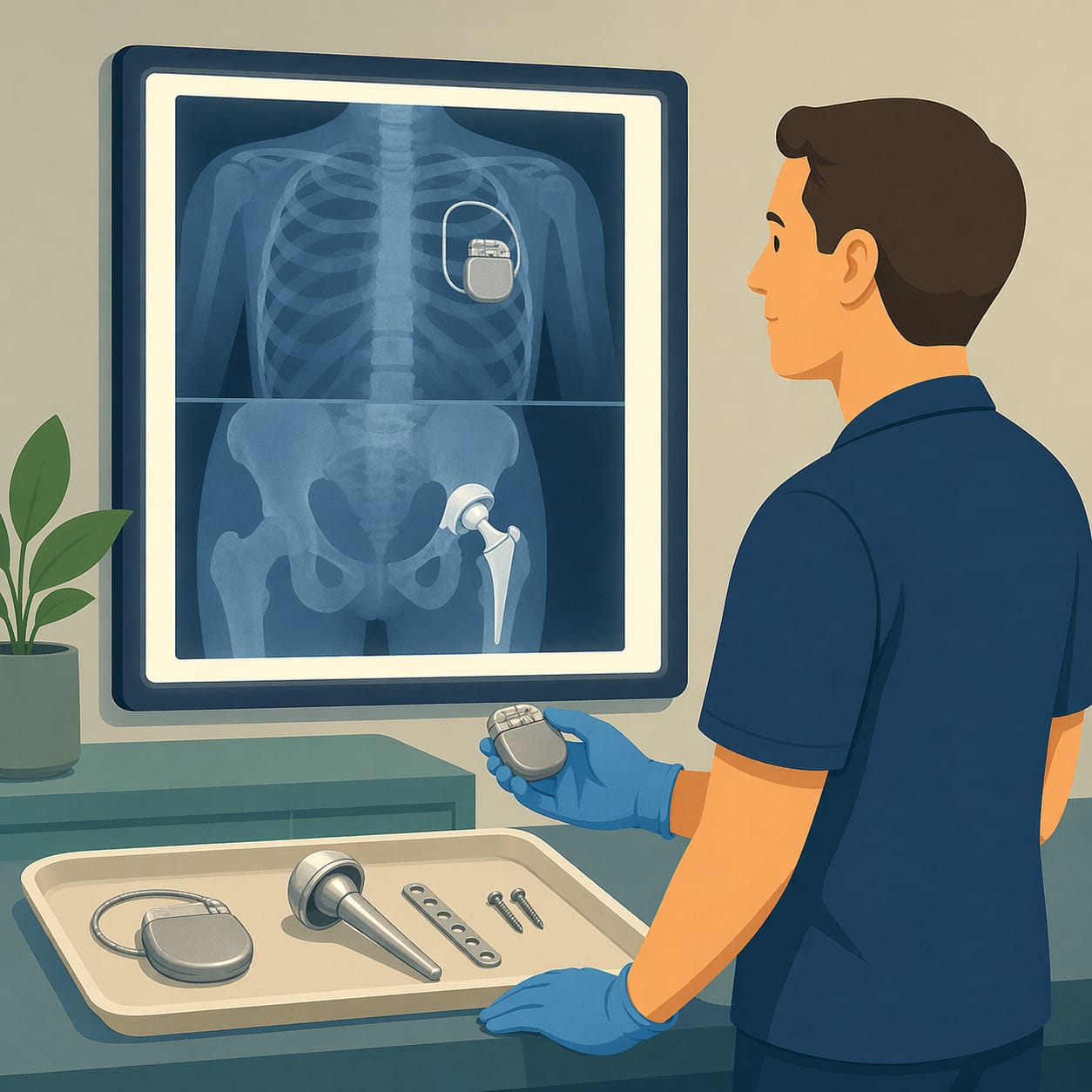
The most important example is a pacemaker.
Pacemakers and similar battery-powered devices can explode when exposed to the high heat of a cremation chamber. That can damage equipment and create a risk for staff. Because of that, they are always removed before cremation.
Other devices that may also require removal include:
-
defibrillators (ICDs)
-
certain infusion pumps
-
any device with a battery or pressurized component
This isn’t discretionary. It’s standard practice across the industry.
What about joint replacements and other implants?
Many people have surgical implants such as:
-
hip replacements
-
knee replacements
-
dental work
-
surgical rods, screws, or plates
These items are typically made of metal and do not pose the same risk as pacemakers. They are usually not removed before cremation.
Instead, they remain with the body during cremation and are separated afterward during the processing stage.
After cremation:
-
metal fragments are identified and removed
-
they are separated from the cremated remains
-
they are either recycled or disposed of according to the provider’s policies
Many crematories participate in metal recycling programs, often working with specialized companies. In some cases, proceeds from recycled metals are donated to charity.
What happens to prosthetics and external devices?
External prosthetics, such as artificial limbs, are typically removed before cremation. These are not usually cremated with the body.
If the family has preferences about these items, such as returning them or donating them, that should be discussed with the provider ahead of time.
Can personal items be cremated with the body?
Families sometimes want to include meaningful items, such as:
-
jewelry
-
letters
-
photos
-
small keepsakes
Some of these may be allowed, but not all.
Items that are:
-
combustible and safe
may be approved.
Items that are:
-
metal-heavy
-
battery-powered
-
pressurized
-
hazardous
will usually be removed.
If something is important, don’t assume. Ask. A good provider will walk you through what is and is not allowed.
What happens to items that are removed?
This is where it’s important to be clear before signing any paperwork.
Items that are removed prior to cremation may be:
-
returned to the family
-
disposed of according to policy
-
recycled, in the case of certain materials
For example:
-
pacemakers are typically removed and handled as medical waste
-
metals recovered after cremation are often recycled
-
jewelry is usually returned if requested in advance
If there is something you want back, say that clearly and confirm it is documented.
Why this matters more than people expect
For most families, this isn’t just about logistics. It’s about trust.
You’re relying on a provider to:
-
handle the body safely
-
follow proper procedures
-
respect personal and medical details
-
communicate clearly about what’s happening
This is also one of the areas where misunderstandings can happen if expectations aren’t discussed upfront.
A simple question like, “What will be removed, and what will be returned to us?” can prevent a lot of confusion later.
A quick way to think about it
If you want a simple framework:
-
Must be removed before cremation: pacemakers and similar devices
-
Usually removed after cremation: metal implants like hips and knees
-
Sometimes removed before cremation: external prosthetics and unsafe items
-
Case-by-case: personal items and keepsakes
Final thoughts
This part of the process is handled quietly and professionally, but it’s not something you have to leave to guesswork.
If you’re planning ahead, include your preferences in your documentation. If you’re making decisions after a loss, ask questions and get clear answers before moving forward.
Because at the end of the day, this isn’t just about equipment or policy. It’s about making sure everything is handled safely, respectfully, and in line with what you and your family actually want.
