
 Buried in Work Staff
For many families, the cremation decision isn’t just practical. It’s spiritual. Even when someone strongly prefers cremation or burial for personal reasons, religion may still shape what feels acceptable, respectful, or meaningful.
The tricky part is that there is no single “religious view” on cremation. Some faith traditions embrace it. Some discourage it. Some prohibit it. And some allow it, but only under certain conditions. That means families should be careful about assuming what a religion teaches based on what friends, relatives, or even a local congregation have done.
Start with this: beliefs often matter as much as rules
When people ask whether a religion “allows” cremation, they’re often really asking two different questions. One is legal or doctrinal: is cremation permitted? The other is pastoral or personal: will this choice feel right within our family’s beliefs and practices?
That distinction matters because even within the same broad religion, practice can vary. A denomination may officially permit cremation, while a particular family still prefers burial. Or a religion may strongly favor cremation culturally, while local customs shape how and when it happens.
Catholic views on cremation
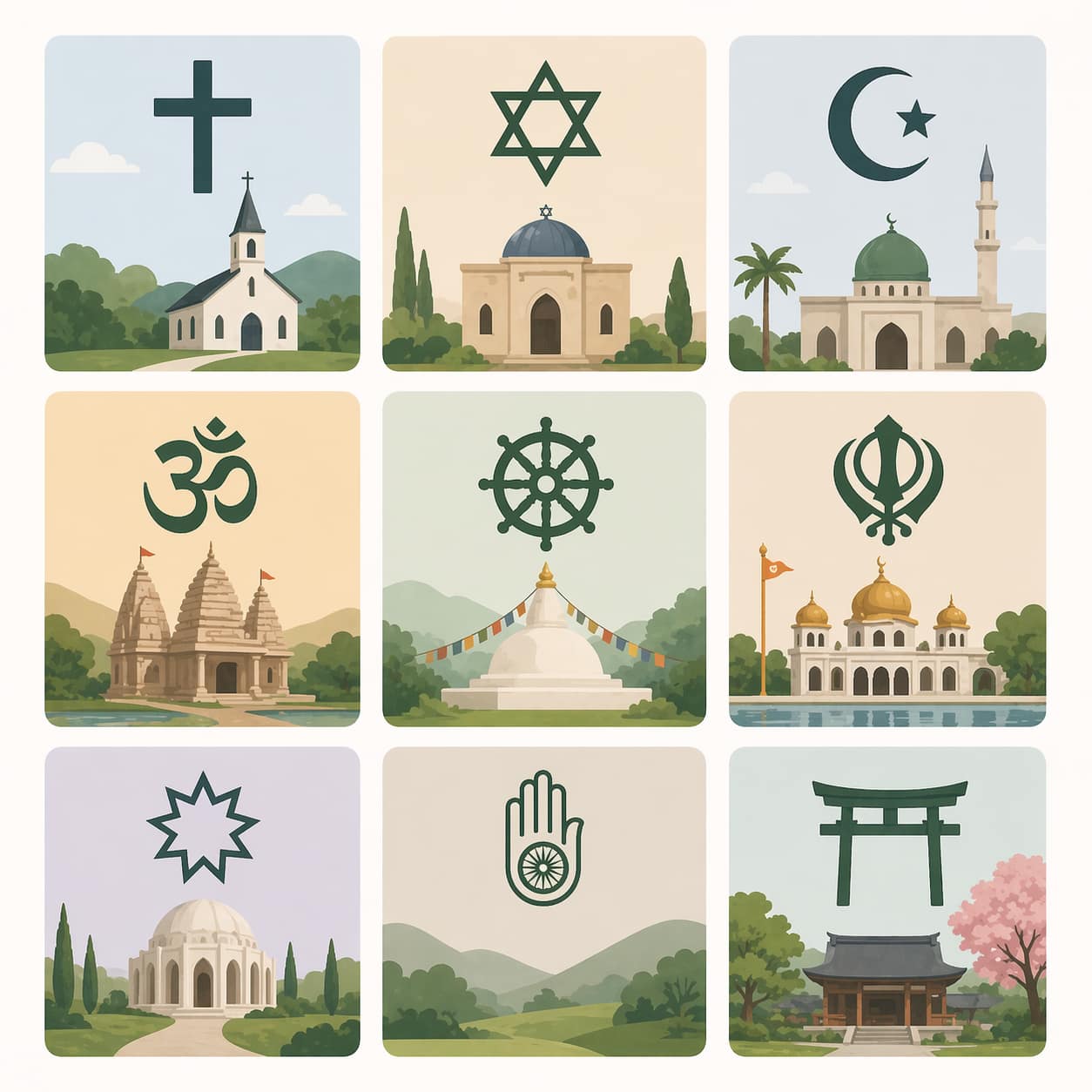
The Catholic Church allows cremation, but it still prefers burial of the body. The Vatican’s 2016 instruction says the Church “continues to recommend strongly” burial, while permitting cremation as long as it is not chosen for reasons contrary to Christian doctrine. The same instruction also says ashes should be kept in a sacred place, such as a cemetery or another place set aside for that purpose, rather than stored casually at home or scattered. A 2023 Vatican response reaffirmed that ashes belong in a sacred place, though it addressed limited pastoral questions about preserving a minimal part of ashes in exceptional cases.
In practical terms, that means Catholic families may choose cremation, but they should not assume that scattering, dividing ashes freely, or keeping the urn on a bookshelf aligns with Church teaching. For observant Catholic families, it is worth checking with the parish before finalizing plans.
Protestant and other Christian views
Christian views on cremation are not uniform. Many Protestant denominations now accept cremation without major restrictions, and in many communities it has become a common choice. Still, some Christians prefer burial because of its symbolic connection to the death, burial, and resurrection of Jesus, while others see cremation as fully compatible with Christian faith. The broader Christian landscape is best understood as varied rather than unified on this issue.
Because of that variety, it helps to ask a local pastor or church leader what is customary or encouraged in that tradition. The answer may depend as much on denomination and local practice as on broad Christian identity.
Jewish views on cremation
Traditional Judaism strongly opposes cremation. Chabad’s explanation of Jewish law describes burial in the earth as the required practice and states that cremation is not permitted. Chabad also explains that the body is treated as holy and that cremation has long been rejected in Jewish thought.
That said, Jewish communities are not monolithic, and individual families may make different decisions. But if a family is trying to follow traditional Jewish law, burial rather than cremation is the norm. This is an area where speaking with a rabbi is especially important, particularly if there are concerns about funeral timing, cemetery burial, or how to handle an existing cremation decision within Jewish practice.
Muslim views on cremation
In Islam, cremation is generally prohibited. Islamic legal sources commonly state that a deceased Muslim should be buried, and that burning or cremating the body is not permissible under normal circumstances. Islamic guidance also places importance on prompt burial and respectful handling of the body.
For Muslim families, this is usually not a gray area. The default expectation is burial, not cremation. If a family is facing a difficult situation involving law, travel, public health, or government requirements, it is wise to seek guidance from a knowledgeable local imam or Islamic scholar right away.
Hindu views on cremation
In Hindu traditions, cremation is generally the customary funeral practice. Britannica describes Hindu funeral rites as generally involving cremation followed by disposal of the ashes, often in a sacred river. Britannica also notes that cremation is the traditional method in Hinduism, with burial more often reserved for certain exceptions such as children or renunciants.
That does not mean every Hindu funeral looks the same. Rituals can vary by region, family tradition, caste background, and sect. But at a broad level, cremation is deeply rooted in Hindu funeral practice rather than treated as a modern alternative.
Buddhist views on cremation
Buddhist views on cremation vary across traditions and cultures, but cremation is widely accepted and often common. In some Buddhist traditions, cremation has strong historical and ritual significance, while in others local custom shapes whether burial or cremation is more typical. The key point is that Buddhism generally does not treat cremation as inherently problematic in the way some other religions do.
Because Buddhist practice can differ significantly between Theravada, Mahayana, Vajrayana, and local cultural traditions, families may want guidance from a temple or spiritual leader rather than relying on a generic summary.
What families should do with this information
Religious beliefs can shape more than the cremation decision itself. They may also affect timing, whether the body should be present for rites, what should happen to the ashes, where final placement should occur, and who should lead the service.
That is why the smartest move is often not to ask, “Is cremation allowed in this religion?” but rather, “What does our tradition expect, and what would be most faithful and meaningful here?” That question usually leads to a better conversation with clergy or family decision-makers.
Final thoughts
Religious views on cremation are not one-size-fits-all. Some faiths embrace cremation. Some allow it with limits. Some prohibit it. And even where formal doctrine is clear, personal and family practice can still vary.
If religion matters in this decision, bring it into the conversation early. It is much easier to plan well from the beginning than to discover later that an important belief or custom was overlooked.
