
 Buried in Work Staff
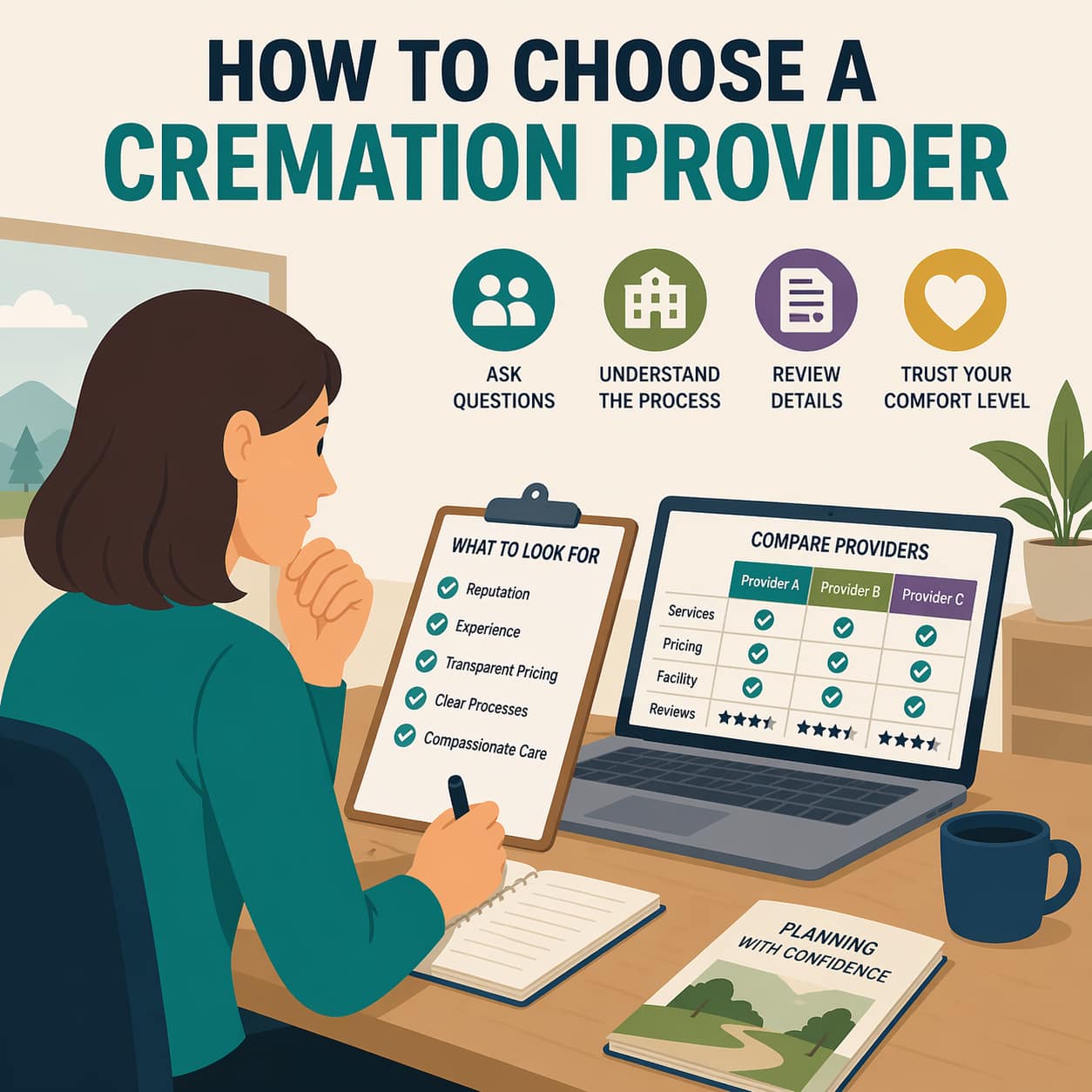
Choosing a cremation provider is not just about finding someone who can perform the service. It is about trusting a company to care for a loved one, follow proper procedures, and guide your family through an emotional and often time-sensitive process. Prices, services, and standards can vary more than most people expect, which is why this decision deserves a closer look.
A good provider should leave you feeling informed, respected, and confident. If something feels unclear or rushed, that is usually a sign to slow down and ask more questions.
What type of cremation provider do you need?
Before you compare providers, it helps to understand what kind of support you are actually looking for. Not all cremation providers offer the same services, and choosing the wrong type can lead to frustration or unmet expectations.
Funeral home
A funeral home is typically the best choice if you want a full-service experience. This may include:
-
Transportation of the deceased
-
Help with permits and paperwork
-
A viewing or visitation
-
A memorial or funeral service
-
Coordination of cremation and final disposition
This option is often best for families who want guidance and support throughout the entire process.
Cremation society
Cremation societies focus primarily on cremation services. They can still help with planning and memorialization, but the approach is often simpler and more streamlined. This can be a good fit if you know what you want and prefer a more focused service.
Cemetery
If you already own cemetery property or plan to place cremated remains in a cemetery, start there. Cemetery staff often have established relationships with local providers and can help point you in the right direction.
Online arrangement company
In some states, you can make cremation arrangements online. These providers are usually staffed by licensed professionals and may offer lower prices. The tradeoff is typically less in-person guidance and fewer opportunities to ask questions face-to-face.
Do not choose a provider based only on price
It is completely reasonable to care about cost. But cremation is not a commodity purchase, and the lowest price does not always tell the full story.
Two providers may both offer “cremation services,” but the differences can include:
-
Where the cremation actually takes place
-
How the body is identified and tracked
-
The level of staff training
-
What services are included or excluded
-
How clearly the provider communicates
A lower price may still be the right choice, but only after you are confident in how the provider operates. Price should be one factor, not the only factor.
How to find a reputable cremation provider
Before making a decision, take a little time to understand who you are working with. A few simple steps can make a big difference.
Look for professional standards
Some providers are members of professional organizations such as CANA and agree to follow established standards for cremation practices. While membership alone is not a guarantee, it can be a helpful signal that the provider values accountability and professionalism.
Ask people you trust
Word of mouth still matters. Consider asking:
-
Friends or family members
-
Clergy or religious leaders
-
Hospice workers
-
Cemetery staff
These individuals often have firsthand experience with local providers and can offer honest insight.
Visit or speak with the provider
If possible, meet the provider before arrangements are needed. Even a brief conversation can tell you a lot about how they communicate, how organized they are, and whether they are willing to answer questions openly.
Questions to ask a cremation provider
This is where you move from general research to real confidence. A reputable provider should be willing and able to answer your questions clearly.
Questions about the crematory
Start by understanding where the cremation actually takes place:
-
Do you have your own crematory, or do you use a separate facility?
-
If you use another facility, which one is it?
-
Who owns the crematory?
-
How often is it inspected?
-
Are licenses and permits current?
-
Does the facility have refrigeration?
-
Does the crematory carry liability insurance?
These questions help you understand the chain of responsibility.
Questions about staff and training
The people handling the process matter:
-
How many operators do you have?
-
What training do they receive?
-
Are any operators certified through recognized programs such as CANA?
You want to know that qualified individuals are handling the cremation process.
Questions about identification and tracking
This is one of the most important areas to ask about.
-
Do you require identification of the deceased before cremation?
-
How do you track the body throughout the process?
-
How do you verify the identity of the cremated remains before returning them?
A professional provider should be able to explain this clearly and confidently.
Questions about timing and logistics
Understanding the timeline can prevent confusion:
-
What is the typical time between receiving the deceased and completing the cremation?
-
If we do not provide an urn in advance, what container will be used?
-
What is your policy for holding cremated remains after completion?
These details help set expectations.
Questions about family preferences
Every family is different. Make sure your needs are addressed:
-
Can family members witness the cremation?
-
What memorialization options are available?
-
What happens to prosthetics such as artificial hips or knees?
If something matters to you, this is the time to ask.
Red flags to watch for
Sometimes the warning signs are subtle. Pay attention to how a provider responds to basic questions.
Be cautious if a provider:
-
Avoids direct answers
-
Seems irritated by reasonable questions
-
Refuses to explain procedures
-
Cannot clearly describe where the cremation takes place
-
Pushes you to make a quick decision
You should never feel rushed or dismissed. Transparency is not optional in this process.
What makes a good cremation provider?
A strong provider is not just defined by what they offer, but how they operate.
Look for a provider who:
-
Communicates clearly and respectfully
-
Explains their process without hesitation
-
Has trained and qualified staff
-
Uses reliable identification and tracking procedures
-
Treats both the deceased and the family with care
In short, you want a provider who earns your trust before you need it.
Final thoughts
Choosing a cremation provider may not be something you have done before, and that is okay. The key is to slow down just enough to ask the right questions and understand your options.
You are not just selecting a service. You are choosing a partner during a difficult moment. The right provider will make that moment more manageable. The wrong one can add confusion and stress when it is least welcome.
Take your time, ask questions, and choose the provider that gives you confidence.
